
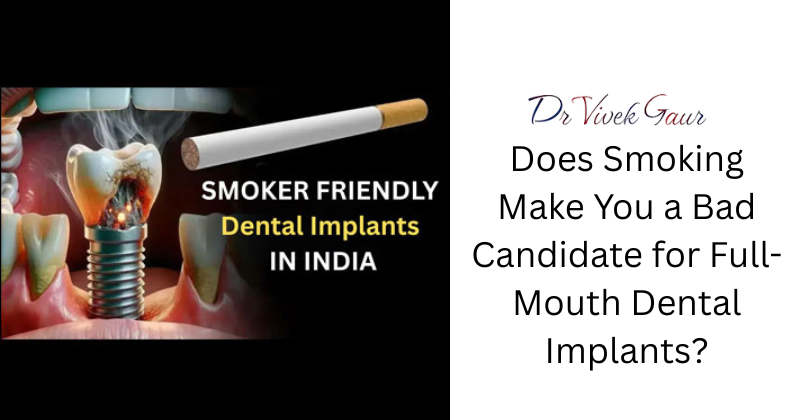
When it comes to oral rehabilitation, full-mouth dental implants have emerged as one of the most reliable and life-changing treatment options available today. However, not everyone is an ideal candidate for this procedure. One significant factor that often complicates the process is smoking. While smoking may seem like a personal habit, its impact on oral tissues and healing mechanisms is profound, making it a serious consideration for both patients and dental surgeons.
Smoking Makes You a Bad Candidate for Traditional Implants
At the outset, it is essential to clarify that we do not promote smoking in any form. The habit introduces harmful toxins and chemicals that constrict blood vessels, reduce oxygen supply, and delay tissue regeneration. These biological effects directly affect the success of implant integration — a process known as osseointegration — where the implant bonds with the jawbone to create a stable foundation. In smokers, this healing process is often slower, less predictable, and more prone to complications such as infection or implant mobility.
When a patient seeks Full-Mouth Dental Implants, the demand for bone strength and gum health becomes even more critical. The extensive surgical area requires optimal circulation and healing potential. Smokers often face reduced bone density and compromised gum support, both of which increase the risk of implant failure. Moreover, constant exposure to heat and nicotine can lead to peri-implantitis — an inflammatory condition that can damage both the soft and hard tissues around the implant.
From a financial perspective, smoking can also make your investment less worthwhile. Considering the overall full-mouth dental implant cost, patients expect durability and long-term performance. However, continued smoking can jeopardize this outcome, leading to additional corrective treatments or even implant loss — both of which raise the total expenditure over time.
Smokers Can Get CorticoBasal® Dental Implants
That said, being a smoker does not always mean you are completely ineligible for full-mouth dental implant procedures. Corticobasal implants present multiple advantages for smokers compared to traditional dental implants, particularly due to their design that addresses smoking-related risks. They anchor into the dense basal cortical bone, bypassing the compromised alveolar bone typical in smokers. Studies indicate high success rates in smokers, provided recommendations of dental professionals are followed.
Our advised to patients who consume tobacco is very simple – slowly limit the quantity
Dr. Vivek Gaur is a leading dental specialist in India, who has fixed artificial teeth in patients who smoke, with a high success rate.
Keep Yourself Updated By Following Our Social Page for The Latest News and Information.


