
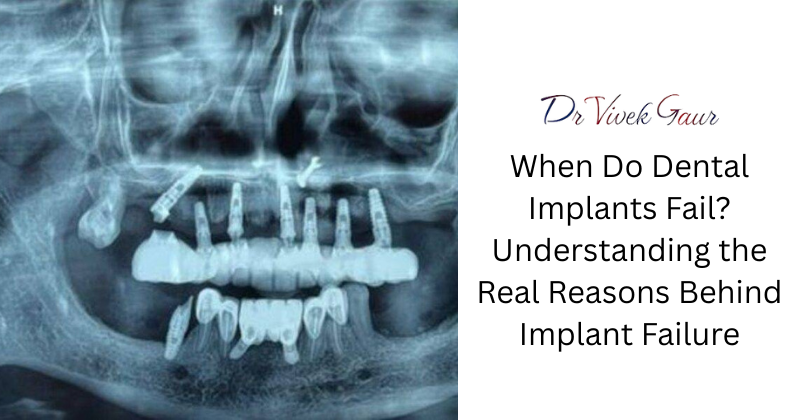
Dental implants have transformed modern dentistry by providing patients with a permanent and functional replacement for missing teeth. However, not all implants deliver the same long-term success. The truth is, implant failure often doesn’t occur because of the material or technology – it usually happens due to poor planning, unskilled execution, or improper patient selection.
A successful implant treatment depends on the operator’s skill, understanding of bone biology, and adherence to scientific protocols. As Dr. Vivek Gaur explains, “The operator is the king.” In implantology, the surgeon’s training and experience determine whether the final prosthetic result will be functionally stable and long-lasting.
Why Implants Fail Despite Advanced Technology
Implant procedures are not just about placing a screw into the bone and attaching a crown. They demand precise evaluation of nerves, sinus proximity, and bone quality. Many failures occur because untrained practitioners overlook these critical aspects. A poorly placed implant may integrate initially but fail under chewing pressure or infection later.
When it comes to full-mouth Dental Implants, the stakes are even higher. Restoring the entire jaw requires expertise in occlusal balance, implant angulation, and load distribution. If these parameters are not meticulously managed, implants can loosen or fracture over time.
The Importance of Training and Implant System
Not every implant system is created equal. Dr. Vivek Gaur emphasizes verifying the origin and authenticity of the implant brand being used. Some clinics may claim to use “Swiss implants” but actually rely on low-quality replicas manufactured elsewhere. Patients should always ask their dentist about the specific system being used, its origin, and its long-term success data.
Furthermore, implantology requires structured training. Clinicians associated with credible institutions such as the International Implant Foundation undergo rigorous postgraduate programs before they perform advanced procedures like CorticoBasal® Implantology.
How Patients Can Prevent Implant Failure
Patients can protect themselves by asking vital questions from the dental doctor:
- What is your long-term success rate?
- Do you have X-rays or records showing results five or ten years after surgery?
- Which implant system are you using, and how long have you used it?
Choosing a well-trained, transparent, and experienced surgeon ensures that your dental implants are not just functional but reliable for years. Implant failure is preventable – when the right expert performs it the right way.
Keep Yourself Updated By Following Our Social Page for The Latest News and Information.


